When it comes to creating a garden that changes throughout the year, few plants offer as much for so little investment as bulbs.
From the first snowdrops and crocuses of late winter to the dramatic colours of tulips in spring, the scented flowers of summer and the rich autumn tones of Nerine, bulbs are one of the easiest ways to introduce colour, seasonal interest and variety into a garden.
They are relatively inexpensive, take up very little space and can be incorporated into almost any style of garden – from a traditional cottage garden to a contemporary planting scheme.
For garden designers, bulbs are an incredibly useful tool. For homeowners, they can be one of the simplest ways to make a garden feel more interesting and carefully considered.
Why are bulbs so useful in garden design?
One of the great advantages of bulbs is that they can occupy space within an established planting scheme without competing with larger plants throughout the year.
Many bulbs spend much of their life underground, emerging when conditions are right, flowering spectacularly and then retreating again.
This makes them particularly useful for creating layers within a planting scheme.
For example, a border might contain:
● Trees providing height and structure
● Shrubs creating permanent framework
● Perennials providing summer colour
● Grasses adding movement and texture
● Groundcover plants filling gaps
● Bulbs providing seasonal bursts of colour
The result is a garden that changes as the seasons progress, rather than looking the same throughout the year.
Bulbs can provide colour from winter to autumn
When people think of bulbs, they often think of spring tulips. But there is a much wider range available.
Late winter
Some of the earliest bulbs can bring welcome colour when the garden is still largely dormant.
Snowdrops (Galanthus) are perhaps the quintessential late-winter bulb, while crocuses can provide splashes of purple, yellow and white.
These early flowers are particularly valuable because there are relatively few other plants flowering at this time of year.
Spring
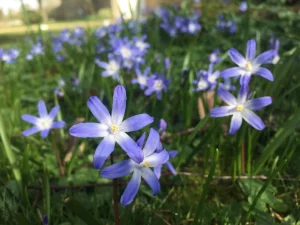
Spring is when bulbs really begin to make an impact.
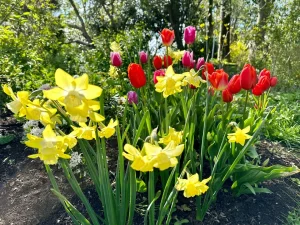
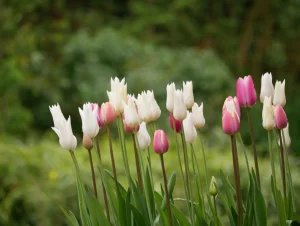
Tulips, daffodils, alliums, fritillaries, hyacinths and many other varieties can be combined to create succession throughout the season.
Tulips are particularly versatile, ranging from elegant, simple flowers to flamboyant double varieties, while alliums can add height and architectural form above lower planting.
Summer
Summer-flowering bulbs and bulbous plants can extend the display well beyond spring.
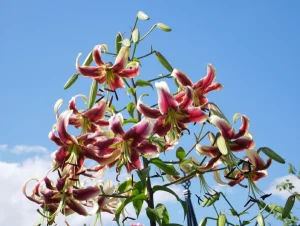
Lilies can provide dramatic flowers and fragrance, while Crocosmia offers vibrant summer colour and excellent movement when planted amongst grasses and perennials.
Agapanthus can also make a strong architectural statement, particularly in sunny, well-drained positions.
Autumn
Autumn is sometimes overlooked when planning bulb displays, but there are some excellent choices for extending colour into September and October.
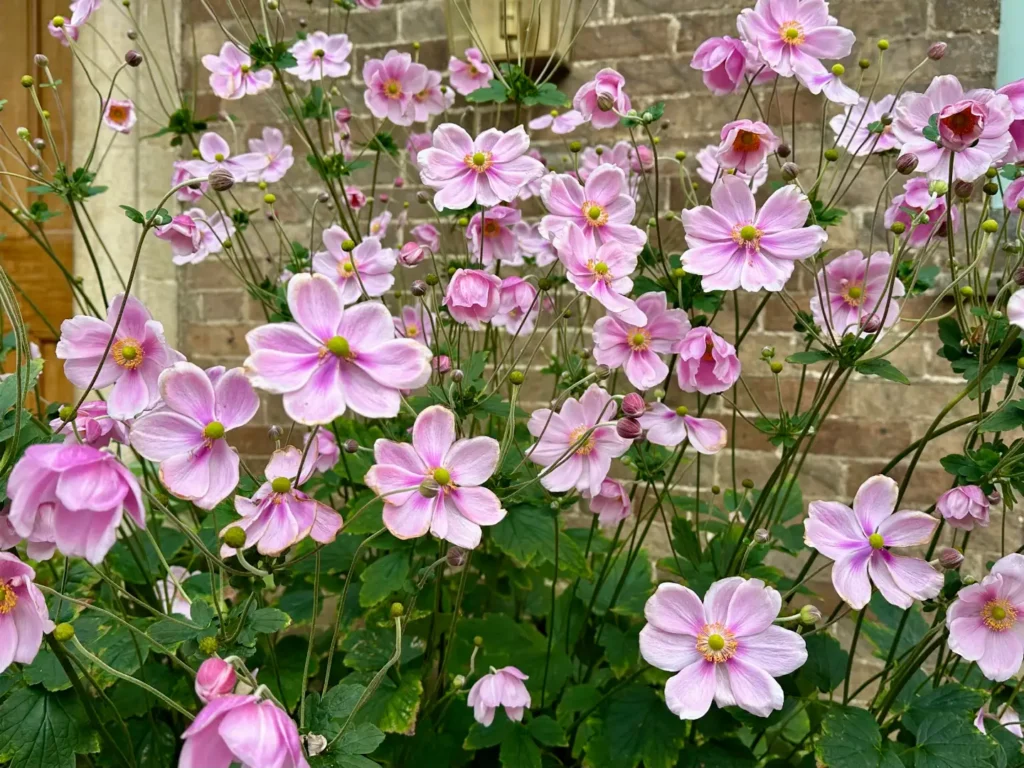
Nerine bowdenii is a particular favourite for late-season colour, producing striking pink flowers just as many summer perennials are beginning to fade.
This is a good example of why a carefully considered planting plan can make such a difference. Instead of simply choosing plants that look attractive at the garden centre, it is possible to deliberately select plants that flower at different times of the year.
Bulbs don’t have to be planted in formal rows
One of the most common mistakes when planting bulbs is creating a very regular arrangement.
Unless you are deliberately creating a formal display, bulbs often look much more natural when planted in groups or informal drifts.
A useful approach is to plant bulbs in groups of varying sizes, allowing some areas to be denser than others.
This can create a more naturalistic effect and prevent the planting from looking too repetitive.
For a contemporary garden, bulbs can also be used more deliberately, perhaps planted in blocks or repeated throughout several borders to create a visual connection between different areas.
Planting bulbs amongst perennials
One of my favourite ways of using bulbs in garden design is to plant them amongst perennial plants.
The bulbs can provide the early-season interest while the perennials are still emerging. As the perennials grow, they gradually disguise the fading bulb foliage.
This is particularly useful because bulb foliage can sometimes look untidy after flowering.
Rather than cutting it back immediately, allow the foliage to die back naturally so that the bulb can replenish its energy for the following year.
A well-designed planting scheme takes this into account from the beginning.
Bulbs are a great way to add colour without taking up much space
Not every garden has room for large shrubs or trees, but almost every garden can accommodate bulbs.
They are particularly useful in:
● Small gardens
● Courtyards
● Raised beds
● Containers
● Narrow borders
● Front gardens
● Gravel gardens
● Naturalistic planting schemes
● Cottage-style borders
Even a relatively small planting area can be transformed by repeating bulbs through the border.
This is one reason they offer such good value. A relatively modest investment can produce a significant visual impact.
Think beyond traditional spring bulbs
There is an enormous range of bulbs and bulbous plants available, and experimenting with less familiar varieties can make a planting scheme much more individual.
Some worth considering include:
Narcissus – reliable, long-lived and available in an enormous range of forms.
Tulipa – from simple botanical tulips to dramatic late-flowering varieties.
Allium – excellent for adding height, structure and architectural seedheads.
Camassia – beautiful blue flowers that work particularly well in naturalistic planting.
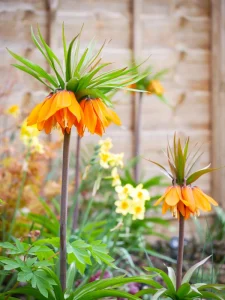
Fritillaria – unusual flowers that can add something different to a spring border.
Crocosmia – vibrant summer colour and excellent for informal planting.
Lilium – dramatic flowers and, in many varieties, wonderful fragrance.
Agapanthus – architectural summer flowers that suit sunny, well-drained gardens.
Nerine bowdenii – superb late-season pink flowers.
Cyclamen – excellent for bringing delicate colour and interest into autumn and winter planting.
The key is not necessarily to use lots of different varieties. Repeating a smaller number of carefully chosen bulbs can often create a much stronger overall effect.
Bulbs and wildlife
Bulbs can also play a role in supporting garden wildlife.
Early-flowering bulbs can provide valuable sources of nectar for pollinating insects emerging early in the year.
Choosing varieties with accessible flowers and combining them with other nectar-rich plants can help create a garden that supports wildlife throughout the seasons.
This is another reason to think about bulbs as part of the wider planting design rather than treating them as an isolated feature.
How many bulbs should you plant?
There is no single answer because it depends on the species, the size of the planting area and the effect you want to achieve.
For a naturalistic planting scheme, relatively dense groups can work beautifully, while a more formal garden might use repetition and spacing to create a deliberate pattern.
One useful principle is to avoid scattering individual bulbs randomly across a large border. Small groups often have far more visual impact than isolated flowers.
Planting bulbs in repeated groups throughout a garden can also help create cohesion, drawing the eye from one area to another.
The importance of a planting plan
This is where professional garden design can really add value.
A planting plan isn’t simply a list of plants. It considers height, structure, colour, texture, flowering periods, repetition, seasonal interest and how the planting will develop over time.
Bulbs can be incorporated into this plan so that they complement the shrubs, perennials and grasses already being used.
For example, a border could be designed to have one combination of bulbs emerging in February and March, another providing colour in April and May, and later bulbs taking over as summer progresses.
The result is a planting scheme that feels deliberately designed rather than simply planted.
A small investment can make a big difference
For homeowners looking to improve an existing garden without completely redesigning it, bulbs can be an excellent place to start.
Adding groups of bulbs to established borders, planting containers with seasonal combinations or introducing bulbs into a new planting scheme can create noticeable changes without requiring a major investment.
And unlike many garden features, bulbs have the potential to return year after year.
Some varieties will naturalise and gradually establish themselves, creating an increasingly impressive display as the years pass.
Let your garden change with the seasons
A successful garden shouldn’t necessarily look exactly the same in January as it does in July.
Part of the pleasure of gardening is watching the garden change.
Bulbs are one of the simplest and most effective ways to create that sense of movement through the year. They can provide the first flowers of spring, dramatic colour in May, vibrant summer displays and a final burst of colour in autumn.
Reliable, inexpensive, versatile and available in an extraordinary range of colours and forms, bulbs deserve a much bigger role in garden design.
At PE4 Garden Design, planting schemes are designed with the whole year in mind. By combining trees, shrubs, perennials, grasses and bulbs, it is possible to create gardens that have interest throughout the seasons while remaining practical and appropriate for the space.
If you’re considering a new planting scheme, refreshing an existing border or simply want more colour throughout the year, a professionally designed planting plan can help you make the most of every part of your garden.