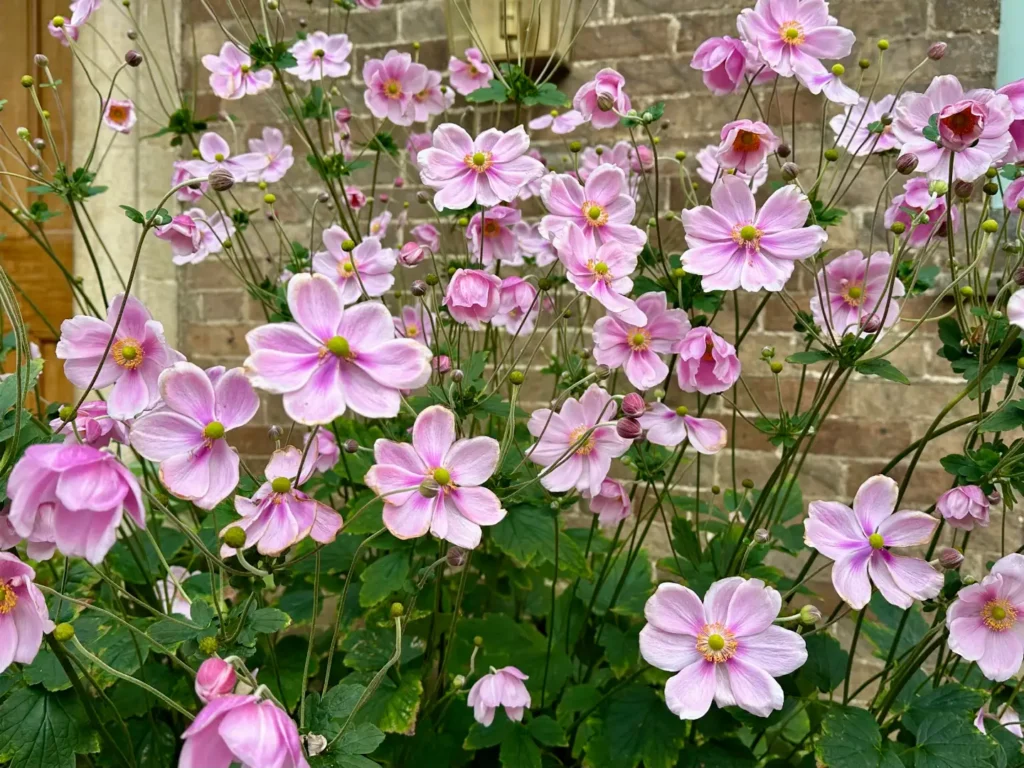
Fragrance, white flowers, silvery foliage, shadows and subtle lighting – creating a garden that comes alive after sunset.
As November arrives and the evenings draw in, our relationship with the garden changes. By late afternoon, daylight is fading, temperatures are dropping and many gardens become little more than dark silhouettes viewed through the windows.
But does a garden really have to disappear when the sun goes down?
With a little thought and careful design, an outdoor space can become just as atmospheric and enjoyable after dark as it is during the daytime. In fact, a well-designed night garden can offer something quite different: an intimate, calming space where fragrance, texture, reflected light and carefully placed illumination take centre stage.
A night garden isn’t necessarily about installing lots of garden lighting. It’s about understanding how plants, materials, shadows and light interact, and using them to create atmosphere.




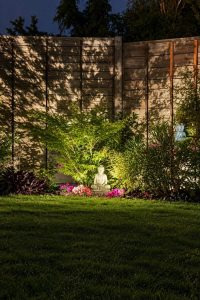



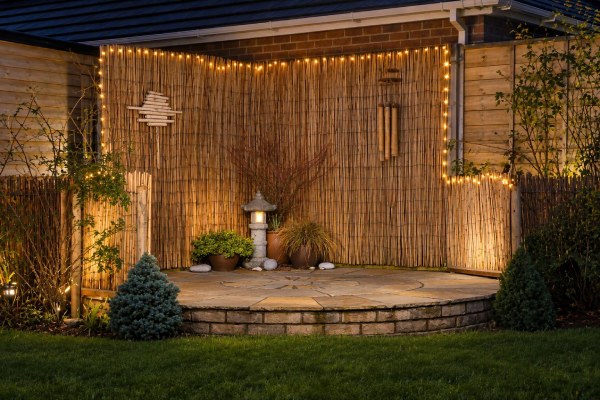
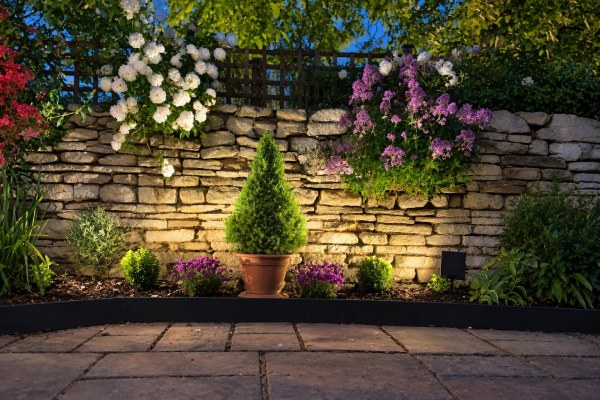
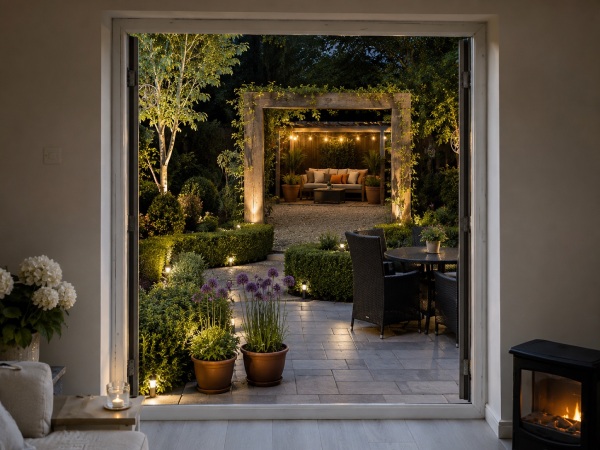
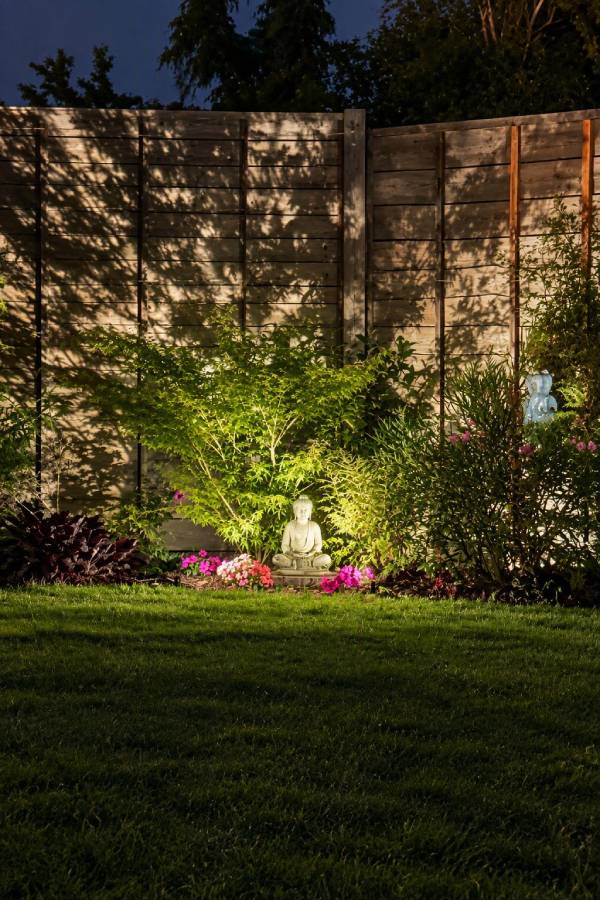
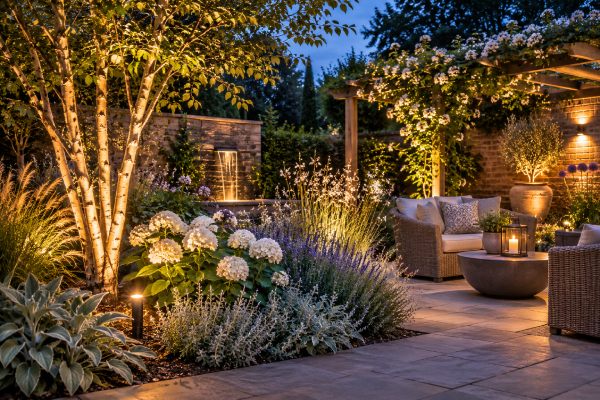

Here are some ideas for designing a garden that works beautifully after dark.
1. White Flowers That Glow in the Darkness
White flowers are particularly effective in a night garden. While brightly coloured flowers can lose their impact as daylight fades, white and pale flowers remain visible, often appearing to glow against darker backgrounds.
Consider incorporating plants with white flowers into borders close to seating areas, pathways and windows where they can be appreciated in the evening.
Some excellent choices include:
- Nicotiana sylvestris – tall, elegant stems carrying pendant white flowers, with a wonderful evening fragrance.
- Jasmine officinale – a climbing plant with delicate white flowers and an intoxicating scent.
- Phlox paniculata ‘David’ – fragrant white flower heads that provide summer interest.
- Anemone × hybrida ‘Honorine Jobert’ – elegant white flowers held above attractive foliage in late summer and autumn.
- Cosmos bipinnatus ‘Purity’ – airy foliage and masses of delicate white flowers through summer and into autumn.
- Hesperis matronalis alba – sweet rocket, with clusters of fragrant white flowers, particularly noticeable in the evening.
White flowers work particularly well when planted against dark evergreen backgrounds, where the contrast makes them stand out even more.
2. Fragrance: A Garden for the Senses
One of the most enjoyable aspects of a night garden is fragrance.
Some plants release more of their scent during the evening, attracting night-flying pollinators such as moths. This makes fragrance an important consideration when designing a sensory garden.
Rather than scattering fragrant plants throughout the garden, think about where people will experience them.
Position scented planting close to:
- Outdoor seating and dining areas.
- Paths and entrances.
- Open windows and doors.
- Pergolas and sheltered seating spaces.
Some particularly useful fragrant plants include:
- Jasminum officinale – a classic climbing plant with wonderfully scented flowers.
- Lonicera periclymenum – honeysuckle, particularly valuable for its evening fragrance.
- Philadelphus – mock orange, with beautifully scented summer flowers.
- Daphne odora – highly fragrant winter flowers, often appreciated on mild days.
- Nicotiana – evening-scented tobacco plants.
- Matthiola longipetala – night-scented stock, which produces an impressive fragrance after sunset.
A combination of plants flowering at different times of the year can ensure that fragrance is not restricted to the summer months.
3. Silvery Foliage and Plants That Catch the Light
Flowers are only part of the picture. Foliage can be just as important in a night garden, particularly plants with silver, grey or pale green leaves.
These colours reflect available light more effectively than many darker greens, helping planting to remain visible after sunset.
Some excellent examples include:
- Artemisia ‘Powis Castle’ – fine, silvery foliage with a soft, architectural appearance.
- Stachys byzantina – lamb’s ears, with wonderfully tactile silver leaves.
- Lavandula angustifolia – silver-grey foliage that provides year-round structure.
- Helichrysum italicum – curry plant, with aromatic silver foliage.
- Festuca glauca – compact ornamental grasses with blue-grey foliage.
- Brunnera macrophylla ‘Jack Frost’ – attractive silver-patterned leaves that brighten shaded areas.
Ornamental grasses can also be particularly effective. Their fine leaves and delicate flower heads create movement and texture, while catching the light from nearby lighting installations.
Think about combining different foliage textures rather than relying on colour alone. Fine grasses, broad silver leaves and evergreen structural planting can create an interesting composition even when flowers are absent.
4. Shadows, Silhouettes and Structure
One of the most overlooked aspects of garden design is the use of shadows.
During daylight, we tend to concentrate on the appearance of individual plants and garden features. After dark, the relationship between light and shadow becomes much more important.
A carefully positioned light can transform the appearance of a small tree, ornamental grass or architectural plant.
For example:
- Uplighting a multi-stem tree can create dramatic branching shadows.
- Lighting through ornamental grasses produces delicate, moving patterns.
- A light positioned behind a specimen plant can create an interesting silhouette.
- Climbing plants on a wall or pergola can cast beautiful shadows when illuminated from the side.
Trees with interesting bark, multi-stemmed specimens and plants with distinctive architectural forms are particularly useful.
The aim isn’t to illuminate everything. It’s to select a few features that become focal points once the garden is dark.
5. Garden Lighting: Less Is Often More
Good garden lighting is about creating atmosphere rather than flooding the garden with light.
Too many bright lights can make an outdoor space feel harsh and detract from the natural qualities of the planting.
Instead, consider using several layers of subtle lighting.
Pathway lighting
Low-level lighting can help define routes through the garden without creating excessive glare. Recessed lights, discreet bollards and carefully positioned ground lights can all work well.
Feature lighting
Use directional spotlights to highlight specimen trees, architectural planting, water features or attractive stonework.
Wall and boundary lighting
Soft illumination can create depth and make a garden feel larger. Lighting a boundary wall or textured surface can also provide a beautiful backdrop to planting.
Seating and entertaining areas
A combination of wall lights, pendant lighting beneath a pergola and discreet integrated lighting can create a welcoming atmosphere.
Water features
Water is particularly interesting after dark. A subtle light reflecting across the surface of a pond or rill can introduce movement and sparkle without overwhelming the space.
Where possible, choose warm white lighting (around 2700K), which generally produces a softer, more welcoming appearance than cooler white lighting.
Consider dimmable fittings, separate lighting circuits and timers so that different parts of the garden can be illuminated independently.
Good lighting design should also consider wildlife. Avoid unnecessarily illuminating planting beds, ponds and mature trees, and use directional, shielded fittings to minimise light spill into neighbouring properties and habitats.
6. Materials That Reflect and Absorb Light
The choice of hard landscaping materials can have a surprisingly significant effect on how a garden looks after dark.
Pale limestone, buff gravel, light-coloured paving and cream-rendered walls can all help reflect available light, making spaces feel brighter and more inviting.
In contrast, darker materials such as black limestone, dark brick and natural timber can absorb light and create dramatic backgrounds.
This contrast can be particularly effective when combined with silver foliage and white-flowering plants.
Water also introduces another dimension. Even a small reflecting pool, rill or still water bowl can capture the surrounding light and create a focal point.
Think about how materials will look in both daylight and artificial light when selecting your garden finishes.
7. Designing a Garden That Works Throughout the Year
A successful night garden shouldn’t rely entirely on summer flowers.
November and the winter months are actually an excellent time to appreciate the underlying structure of a garden.
Evergreen shrubs, ornamental grasses, attractive bark, architectural trees and carefully positioned lighting can all provide winter interest.
Consider plants such as:
- Cornus alba ‘Sibirica’ – striking red stems that become particularly noticeable in winter.
- Betula utilis var. jacquemontii – beautiful white bark that can be highlighted with subtle lighting.
- Nandina domestica – attractive evergreen foliage and seasonal colour.
- Phormium – architectural foliage that creates strong silhouettes.
- Miscanthus sinensis – ornamental grasses with attractive flower plumes that catch the light.
- Sarcococca confusa – an evergreen shrub with wonderfully fragrant winter flowers.
The key is to combine permanent structure with seasonal planting and lighting that can be adjusted throughout the year.
8. Creating a Place to Enjoy the Garden After Dark
Ultimately, a night garden should be somewhere you want to spend time.
A sheltered seating area, perhaps beneath a pergola or close to the house, can provide a comfortable place to enjoy the garden even when the temperature drops.
Consider incorporating:
- A sheltered seating area with comfortable furniture.
- A fire pit or outdoor fireplace, where appropriate.
- Fragrant planting close to seating.
- Subtle lighting around pathways and focal points.
- A water feature to introduce sound and movement.
- Evergreen planting to provide a sense of enclosure.
Even a relatively small garden can benefit from these ideas. A carefully positioned bench, a fragrant climber, a few silver-leaved plants and some well-designed lighting can completely change the way an outdoor space is experienced.
The Garden Doesn’t Have to End at Sunset
We often think about garden design in terms of colour, planting combinations, materials and how a space looks in bright daylight. But darkness offers another opportunity to create something special.
A garden designed for the evening is a garden that considers all the senses. Fragrance becomes more important, pale flowers and silver foliage catch the available light, trees and plants create interesting shadows, and subtle lighting brings the whole composition together.
As the November evenings draw in, perhaps it’s worth looking at your garden in a slightly different way.
Rather than seeing darkness as the end of the gardening day, think of it as another design opportunity.
At PE4 Garden Design, we believe a well-designed garden should work throughout the day and across the seasons. With thoughtful planting, carefully chosen materials and considered lighting, even the darkest evenings can offer a reason to enjoy your outdoor space.