When the garden is at its quietest and most bare, we decorate our homes with greenery. Many of the plants now firmly linked with Christmas carry with them layers of history, symbolism, and practical gardening use. From holly wreaths to mistletoe kisses, here’s a look at some of the season’s most iconic plants — and how they can play a role in your own garden design.






Holly
(Ilex aquifolium)
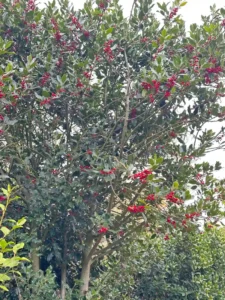
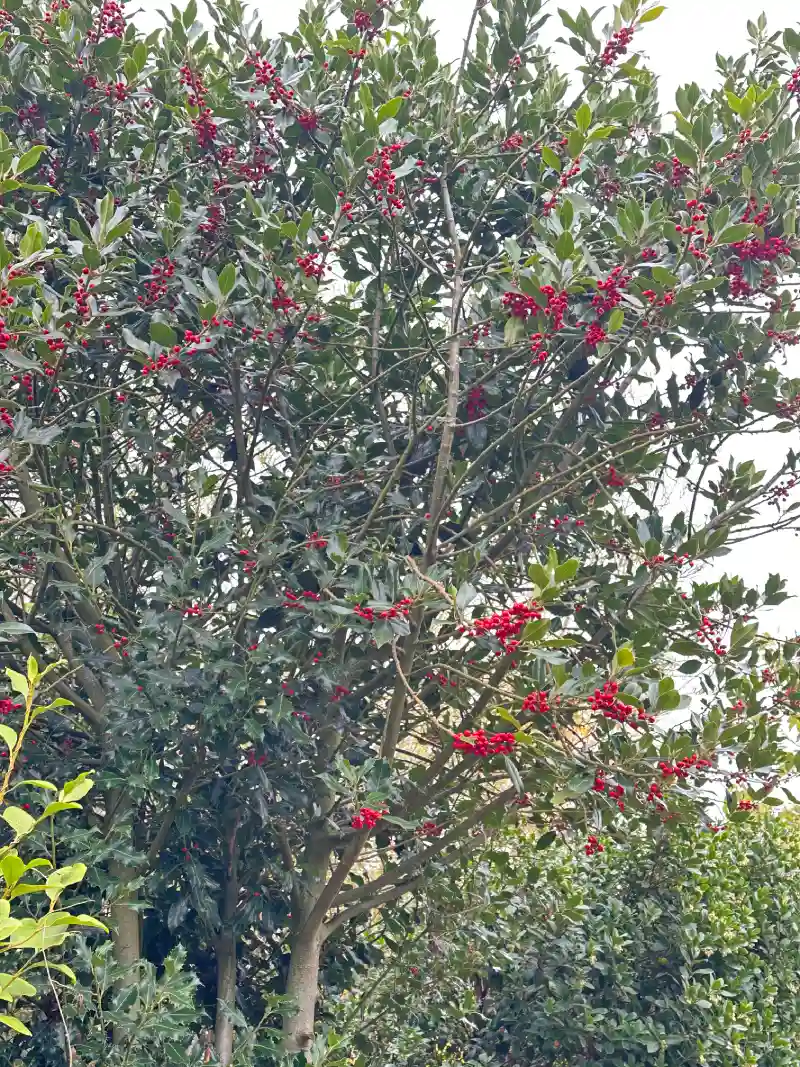
Few plants are as instantly Christmassy as holly. Its glossy, spiked leaves and bright red berries have appeared in winter celebrations since Roman times, when holly garlands were hung for Saturnalia. Later, it became tied to Christian imagery, with its berries symbolising Christ’s blood.
In the garden: Holly is both ornamental and practical. It clips beautifully into hedges and topiary, making it a useful plant for structure in formal designs. Variegated cultivars such as ‘Silver Queen’ brighten winter borders, while berrying varieties add colour and feed birds. A holly hedge can serve both as a windbreak and as a source of festive decoration.
Ivy
(Hedera helix)
Always green, always climbing, ivy was once seen as holly’s feminine counterpart in medieval songs and customs. Its ability to remain lush when all else is bare explains its enduring association with midwinter.
In the garden: Ivy divides opinion, but when used thoughtfully, it’s a designer’s friend. As groundcover, it suppresses weeds and creates a rich carpet in shady spaces. Climbing varieties soften walls and fences, or can be trained around obelisks for vertical interest. Variegated forms are especially effective in containers and winter planters, brightening doorways through the festive season.
Mistletoe
(Viscum album)
Suspended high in tree branches, mistletoe has fascinated people for centuries. The Druids saw it as sacred, and even today it retains a magical aura. The familiar custom of kissing beneath mistletoe is thought to be a blend of ancient fertility rites and Victorian romanticism.
In the garden: Mistletoe is unusual because it grows as a semi-parasite on trees, most often apple. While it takes patience to establish (by pressing seeds into bark crevices), once thriving it becomes an extraordinary feature. In design terms, it can lend a sense of enchantment to orchards or wildlife-friendly gardens. It also supports biodiversity, providing berries for birds and dense nesting sites.
The Christmas Tree
The Christmas tree as we know it was popularised in Britain by Prince Albert in the 1840s, though the tradition of bringing evergreens indoors reaches much further back. Norway spruce (Picea abies) was once the standard choice, but many now prefer Nordmann fir (Abies nordmanniana) for its soft needles and good shape.
In the garden: Large spruces and firs are magnificent but rarely suited to smaller gardens, as they can reach towering heights. For domestic use, dwarf conifers such as Korean fir (Abies koreana) or container-grown spruces are ideal. These can be decorated outdoors during Christmas, then enjoyed year-round as handsome evergreens. A pair of potted conifers flanking an entrance makes an elegant seasonal display.
The Christmas Rose
(Helleborus niger)
Despite its misleading name, the Christmas rose is not a rose at all, but a hellebore. It flowers in the depths of winter, often pushing through frost with pure white blooms. Legend tells of it being given as a gift to the Christ child, hence its enduring seasonal link.
In the garden: Hellebores are a gift for the winter border. They thrive in shade, tolerate cold, and provide flowers when little else is in bloom. Pair them with snowdrops and evergreen ferns for a rich, layered winter planting scheme. Their leathery foliage makes them excellent groundcover under deciduous shrubs, where they shine during the leafless months.
Yew (Taxus baccata)
Less festive in decoration but deeply symbolic, yew is a tree long linked with immortality and midwinter. Its evergreen foliage and extraordinary lifespan made it sacred to pre-Christian cultures and a fixture in churchyards ever since.
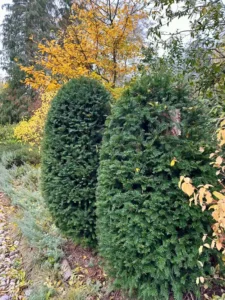
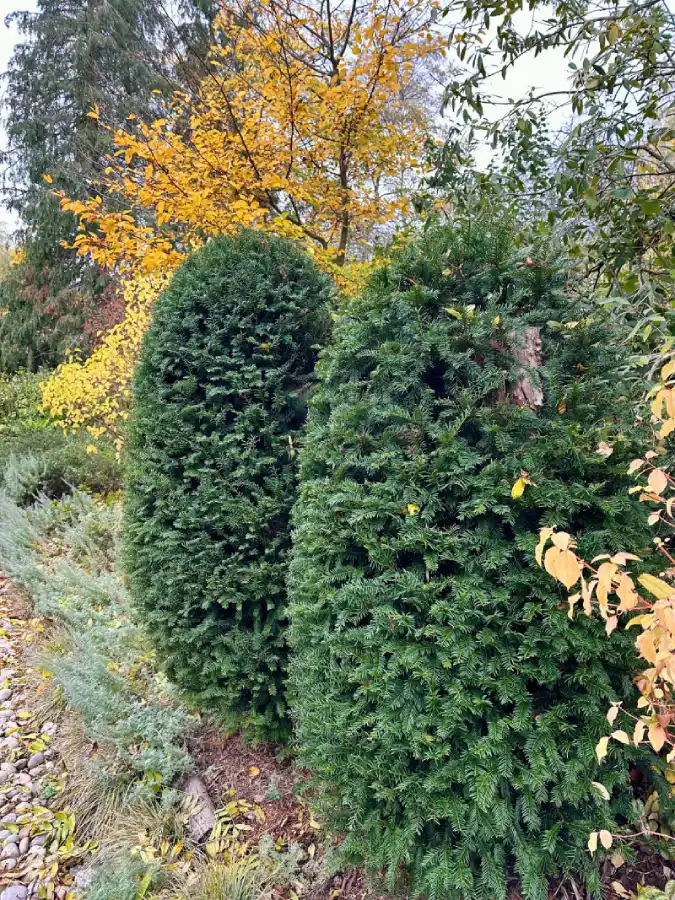
In the garden: Yew is a cornerstone of formal design. It clips into strong shapes for hedges, domes, or topiary, giving the winter garden architectural backbone. Its sombre green pairs well with brighter plants such as variegated holly or red-stemmed dogwood (Cornus alba), creating striking contrast. Even a single yew cone or clipped hedge can transform the garden into a space of calm and order at Christmas.
Bringing It Together
The plants of Christmas are more than seasonal decoration. They carry echoes of ancient customs, faith, and folklore, and they still hold practical value for modern gardens. From the structure of yew to the sparkle of holly berries and the surprise of a midwinter hellebore, these plants keep gardens alive with meaning and beauty when everything else is at rest.